
Introduction: The Jingle Reimagined for the Digital Era
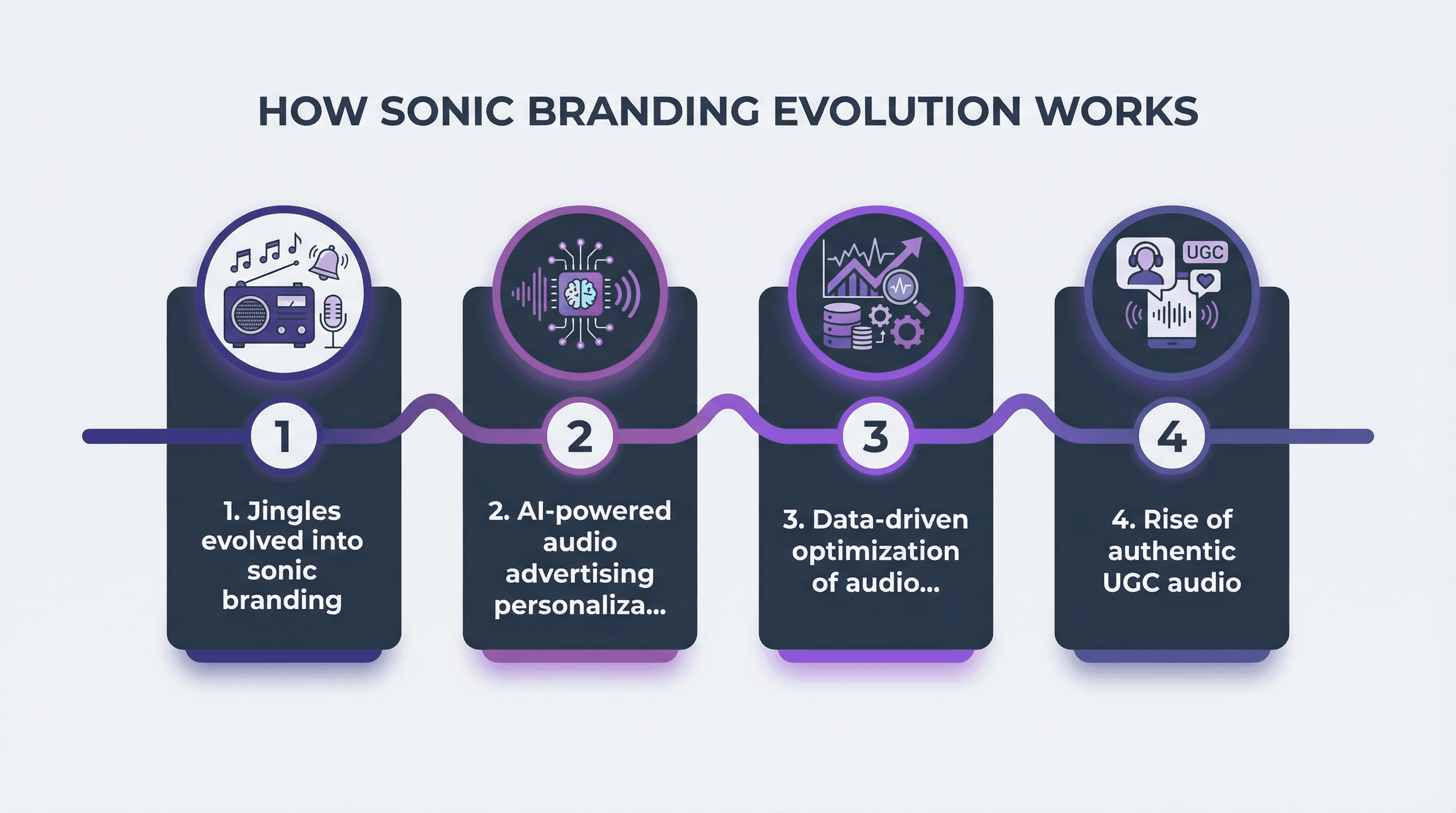
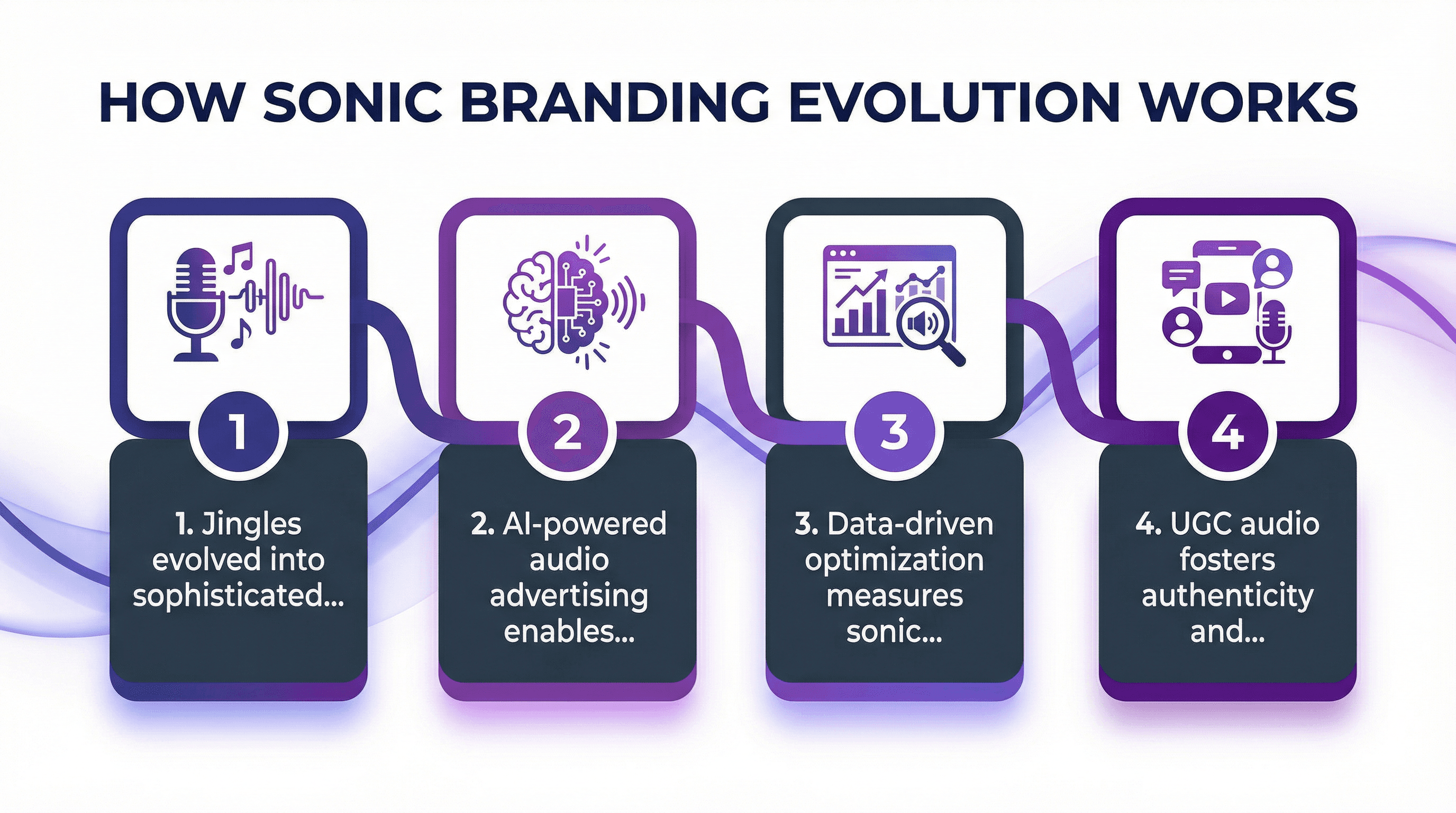
The iconic jingles that once permeated radio waves and television commercials have undergone a profound metamorphosis, evolving into what is now recognized as sonic branding for the digital age. This shift transcends simple catchy tunes, embracing a comprehensive auditory identity crucial for brands navigating an increasingly crowded digital landscape. No longer confined to traditional broadcast, modern audio marketing now thrives across podcasts, streaming services, and smart speakers, demanding a more nuanced and strategic approach to sound design. In this dynamic environment, a distinct sonic signature is paramount for brand recognition and differentiation. The revolution in audio ad creation is largely driven by advancements in artificial intelligence. AI audio advertising is fundamentally changing how brands connect with audiences, facilitating the deployment of highly automated ads that are not only scalable but also deeply personalized. This technological leap allows for unprecedented levels of voice customization and sophisticated voiceovers, dynamically tailoring messages to individual listener preferences and diverse contexts. As a result, data-driven optimization has become paramount, enabling marketers to meticulously measure the impact of their sonic assets and refine strategies for enhanced engagement and efficacy. This reimagined approach ensures that a brand's auditory presence is distinctive, memorable, and strategically integrated into the multifaceted digital consumer journey, marking a significant departure from the static jingles of yesteryear.
Key Takeaways
- Jingles have evolved into comprehensive sonic branding, which is a crucial auditory identity for brands in the digital age.
- Modern audio marketing leverages AI and technology to create automated and personalized ads for diverse digital platforms like podcasts and streaming services.
- Advancements in AI enable sophisticated voice customization and data-driven optimization, leading to enhanced audience engagement and measurable impact.
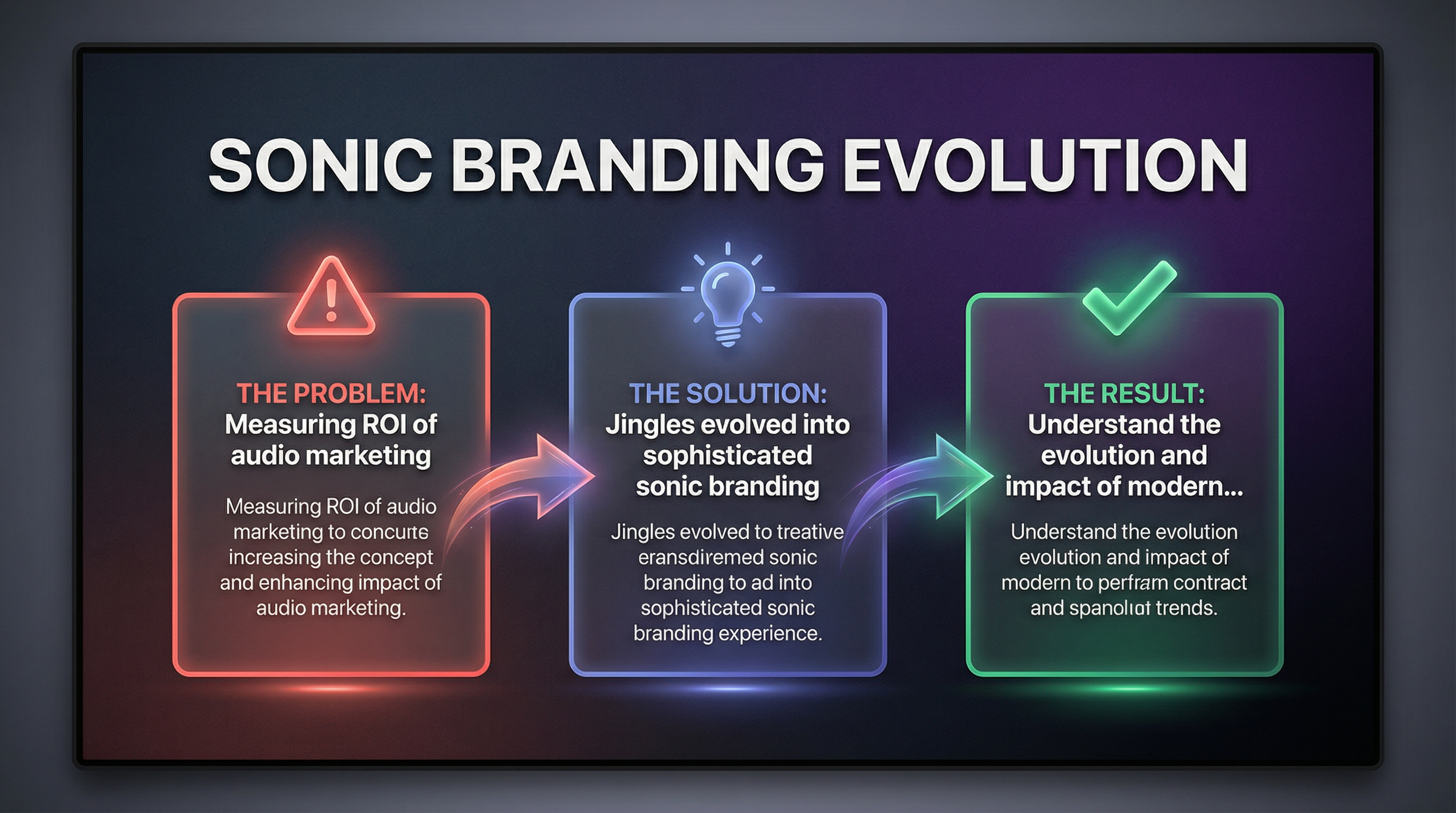
Sonic Branding: More Than Just Jingles
- •Jingles: Catchy, but often limiting.
- •Sonic Branding: A holistic audio identity.
AI-Powered Audio Advertising: Automation and Personalization at Scale
AI is rapidly reshaping the landscape of audio marketing, particularly in the realm of AI audio advertising. This transformative technology allows brands to move beyond traditional manual production methods, ushering in an era of unprecedented automation and personalization at scale. AI tools are now adept at generating high-quality voiceovers and even intricate jingles with remarkable speed and efficiency, significantly reducing production timelines and costs associated with creating automated ads. This capability empowers marketers to deploy diverse creative variations across campaigns, testing and iterating at a pace previously unimaginable.Beyond mere generation, AI's true power lies in its capacity for hyper-personalization. By leveraging vast amounts of listener data—including demographics, listening habits, and real-time context—AI algorithms can dynamically tailor audio messages to individual consumers. This level of data-driven optimization ensures that the content, tone, and even the selected voice customization resonate more deeply with the target audience, enhancing engagement and driving more effective campaign outcomes. Imagine an ad for a local coffee shop changing its offer based on whether the listener is commuting, at home, or searching for nearby amenities.However, the rapid advancement of AI in audio advertising also brings forth critical ethical considerations and potential pitfalls. The ability to synthesize human voices convincingly raises concerns about "deepfakes" and the potential for misuse, such as creating fraudulent content or manipulating public perception. Furthermore, biases inherent in the training data used for AI models can inadvertently lead to discriminatory or unrepresentative voice customization or messaging, undermining the brand's credibility. While the drive for efficiency is strong, brands must navigate these challenges carefully, prioritizing transparency and ethical AI development to maintain consumer trust. Unlike UGC ads or user-generated content audio, where authenticity is often inherent, AI-generated content requires rigorous oversight to ensure it remains genuinely authentic audio marketing. The future of AI audio advertising hinges not just on technological capability, but on responsible deployment that balances innovation with integrity.
Key Takeaways
- AI automates the creation of audio ads, including voiceovers and jingles, for increased efficiency and reduced production costs.
- AI enables hyper-personalization of audio ads by leveraging listener data, leading to higher engagement and more effective campaigns through data-driven optimization and voice customization.
- Ethical considerations, such as the potential for deepfakes and algorithmic bias, are critical challenges in AI audio advertising that require responsible deployment and transparency.
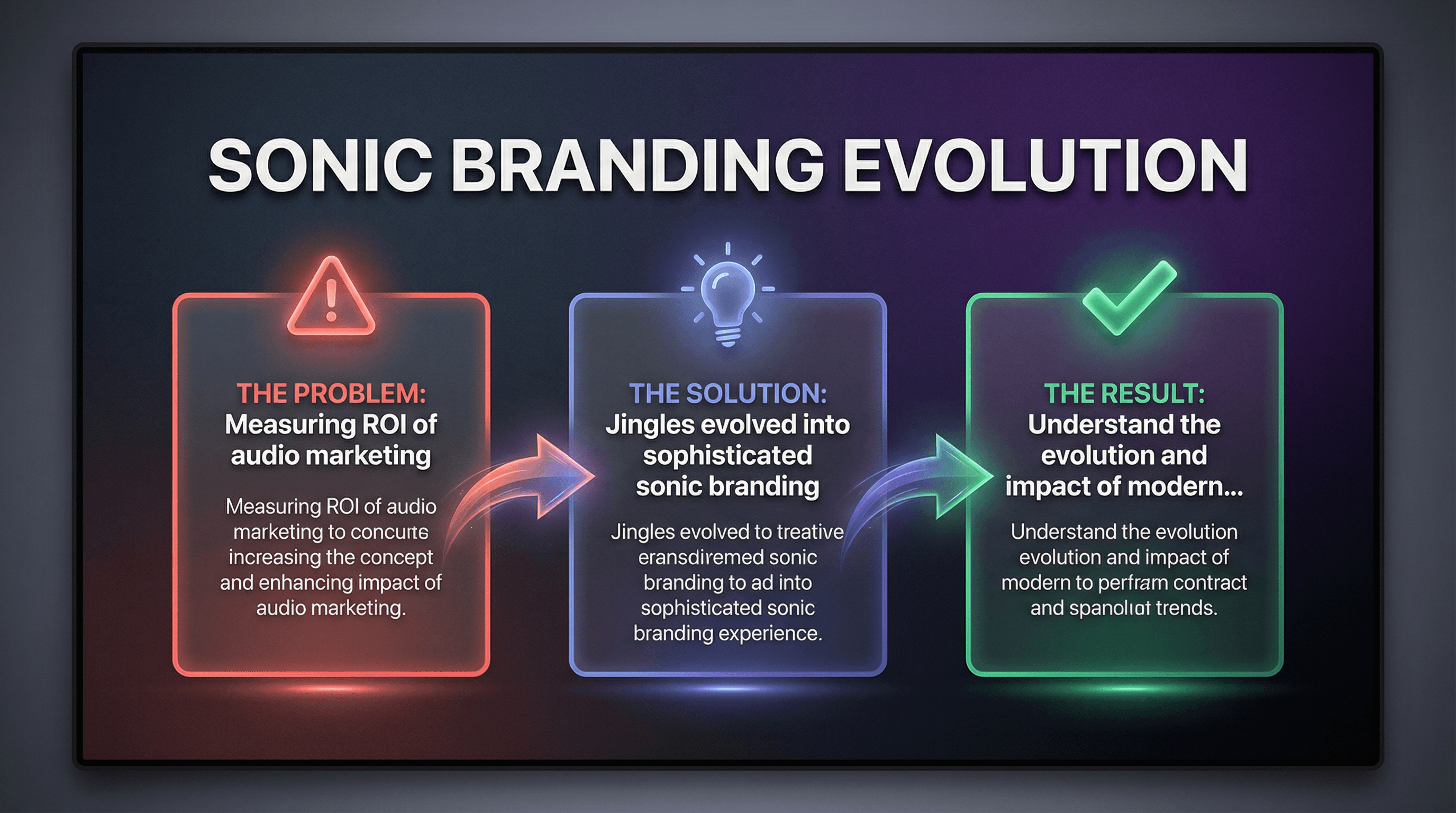
Data-Driven Optimization: Measuring the Impact of Sonic Branding
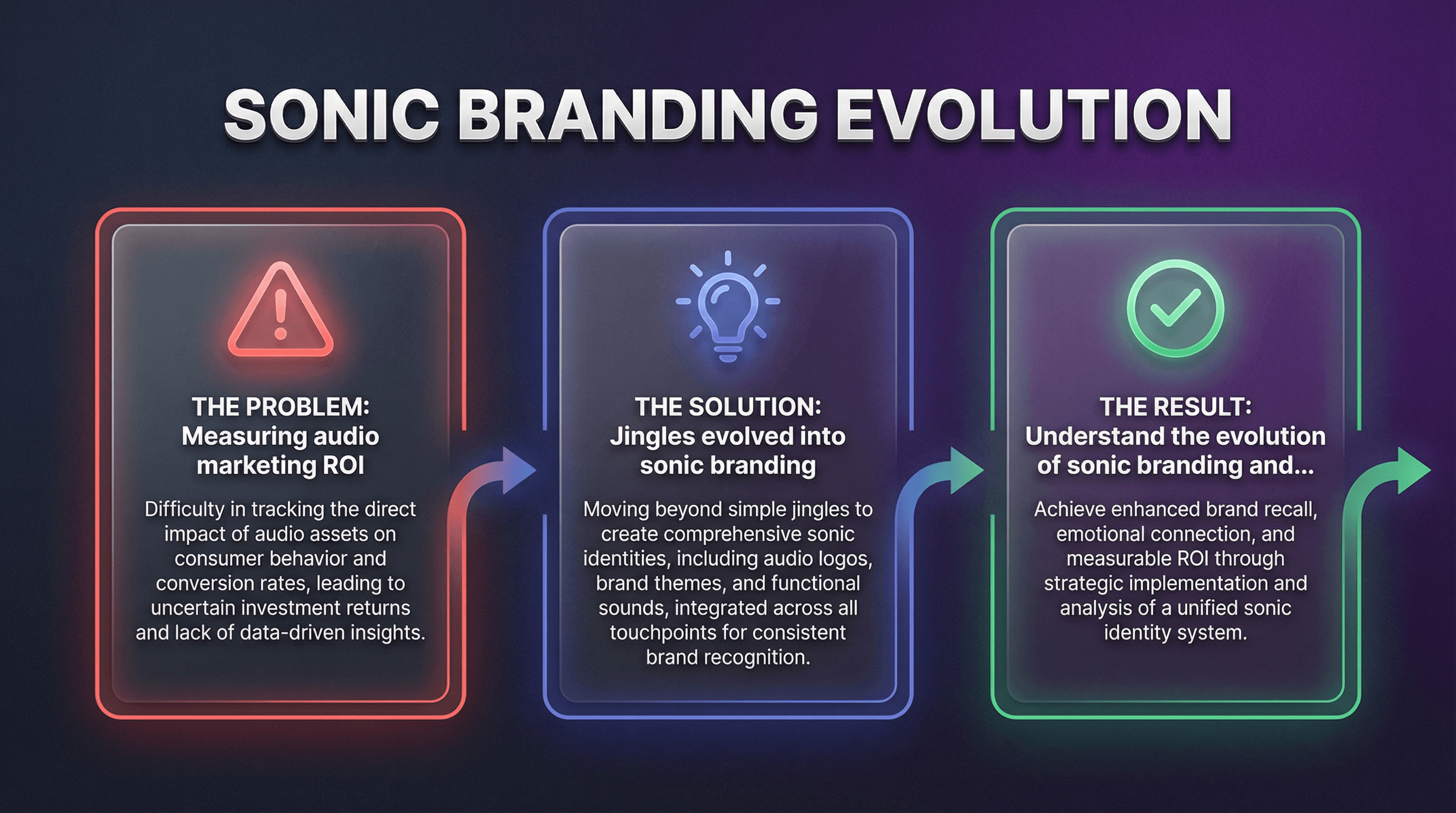
In the realm of modern sonic branding, the efficacy of audio marketing campaigns is no longer solely judged by reach or impression counts. Instead, data-driven optimization has become paramount, enabling marketers to meticulously measure and enhance the impact of their sonic assets. Establishing clear Key Performance Indicators (KPIs) is the foundational step. For AI audio advertising and general automated ads, critical KPIs extend beyond traditional metrics to include aspects like:
- Brand Recall: Measuring the extent to which a unique sonic logo or voice customization enhances memorability and recognition. This often involves post-exposure surveys or neuroscience-based assessments.
- Engagement Rates: Analyzing listener behavior such as ad completion rates, skip rates, and interactions with accompanying visual elements. Higher engagement signals resonance with the audio creative.
- Conversion Rates: Tracking direct actions, whether it's a website visit, a download, or a purchase, attributable to exposure to the audio ad. This provides a tangible ROI measurement.
Key Takeaways
- Data-driven optimization is crucial for measuring and enhancing the effectiveness of modern sonic branding campaigns.
- Key Performance Indicators (KPIs) for audio advertising extend to brand recall, engagement rates, and conversion rates.
- A/B testing and empirical data analysis are essential for refining audio ad creative, including voiceovers and voice customization, to improve engagement.
- Robust attribution modeling is necessary to understand the full impact of audio ads, including authentic audio marketing like user-generated content audio, across the customer journey.
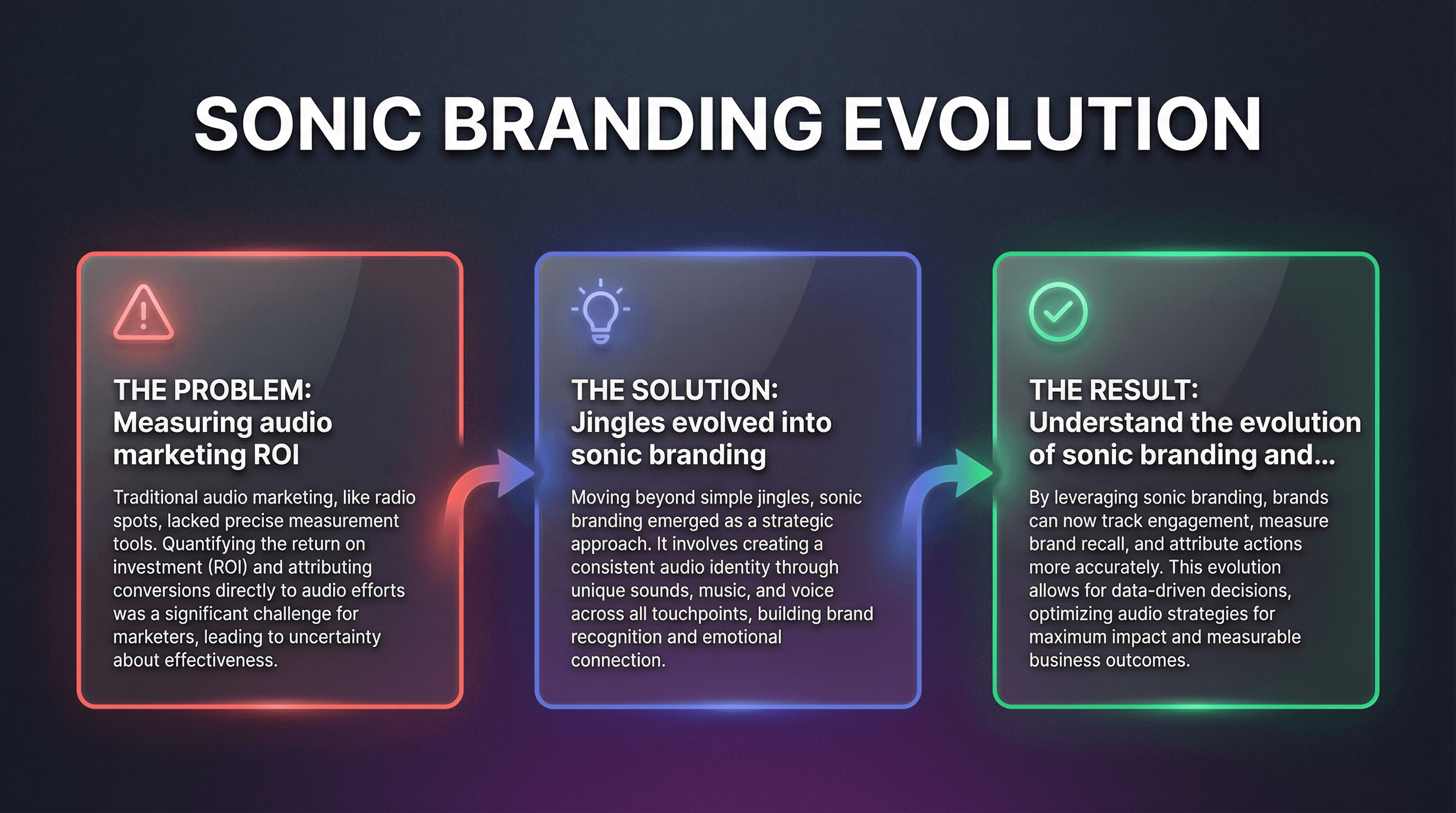
The Rise of UGC Audio: Authenticity and Engagement
User-generated content (UGC) audio represents a significant paradigm shift in audio marketing, leveraging authentic voices to foster deeper brand connections. Unlike traditional automated ads or professional voiceovers, UGC audio campaigns feature real customers sharing their experiences, opinions, or creative expressions related to a brand. This inherent authenticity makes UGC ads highly effective, as consumers increasingly distrust conventional advertising and seek genuine interactions. The power of user-generated content audio lies in its relatability; peer endorsements carry substantially more weight than brand-centric messaging, leading to enhanced trust and significantly higher engagement rates. This form of authentic audio marketing humanizes a brand, creating a community around its products or services.Successful implementations of UGC audio are varied. For instance, a beverage company might launch a social media challenge inviting users to record short audio clips describing their favorite product moments, often accompanied by a unique sound effect or jingle. These submissions, once curated, can be repurposed into highly effective short-form audio marketing snippets across various digital platforms, including podcasts or streaming services. Another example involves brands encouraging users to submit audio reviews or testimonials, which can then be integrated into product pages or promotional content, lending credibility that even sophisticated voice customization cannot fully replicate.To cultivate a robust stream of user-generated content audio, brands must implement strategic initiatives. Firstly, clear calls to action and easy-to-use submission mechanisms are crucial. This could involve dedicated landing pages, specific hashtags for audio submissions on platforms like TikTok or Instagram Reels, or interactive voice response (IVR) systems for direct audio recording. Secondly, offering compelling incentives, such as prizes, exclusive access, or simply featuring top submissions, can significantly boost participation. Lastly, designing creative prompts or challenges that align with the brand's identity encourages users to produce relevant and engaging content. The data derived from the performance of UGC ads can also feed into data-driven optimization strategies, informing future content development and targeting. While AI audio advertising offers scale, user-generated content audio offers the irreplaceable value of genuine human connection.
Key Takeaways
- UGC audio leverages authentic customer voices for marketing, building trust and enhancing engagement more effectively than traditional advertising.
- Successful UGC audio campaigns involve users sharing their experiences or creative content, which brands can repurpose into credible audio marketing snippets across digital platforms.
- To encourage user-generated content audio, brands should implement clear calls to action, provide easy submission mechanisms, offer compelling incentives, and design creative prompts, with performance data informing future data-driven optimization.
Voice Customization and Brand Identity: Crafting a Unique Sonic Signature
Beyond the jingle, a brand's voice serves as a fundamental pillar of its sonic identity, profoundly influencing perception and forging an emotional connection with the audience. The vocal characteristics – including tone, pitch, cadence, and even accent – imbue a brand with a distinct personality, conveying attributes like trustworthiness, approachability, or authority. In the realm of audio marketing, the strategic selection and implementation of a brand voice are paramount, acting as a direct extension of the visual branding and messaging.
Crafting this unique sonic signature necessitates meticulous voice customization. Marketers must consider several critical factors. The chosen tone, for instance, could range from warm and empathetic to direct and informative, directly impacting how messages resonate. An accent might be deliberately neutral for broad appeal or regionally specific to foster a deeper connection with a localized demographic. Similarly, the perceived age and gender conveyed through a voice can subtly shape audience expectations and relatability. These decisions are not arbitrary; they are deeply rooted in understanding the target demographic and the core brand values. Modern tools, including advancements in AI audio advertising, offer sophisticated capabilities for testing various voice attributes and even generating nuanced voiceovers that align with specific brand guidelines, though strategic human oversight remains crucial.
Maintaining a consistent sonic identity across all audio marketing touchpoints is essential for building strong brand recognition and fostering audience engagement. Whether it's through automated ads delivered via programmatic platforms, interactive voice response (IVR) systems, podcast sponsorships, or smart speaker interactions, the brand's voice must be instantly identifiable. This consistency solidifies brand recall and trust, standing out in an increasingly crowded soundscape, particularly one enriched by diverse UGC ads and user-generated content audio. While authentic audio marketing through UGC offers raw appeal, a consistent brand voice provides a professional anchor. Leveraging data-driven optimization techniques allows brands to analyze listener responses to different voice characteristics, iteratively refining their sonic signature to maximize impact and ensure it consistently articulates the brand's unique value proposition. Ultimately, a well-chosen and consistently applied brand voice becomes an irreplaceable asset in the digital sound economy.
Key Takeaways
- A brand's voice is a fundamental pillar of its sonic identity, conveying personality and influencing audience perception.
- Meticulous voice customization involves strategic choices in tone, accent, and perceived age/gender, tailored to target audience and brand values.
- Consistent application of a brand's unique voice across all audio touchpoints (e.g., automated ads, voiceovers, smart speaker interactions) is crucial for brand recognition and audience engagement.
- AI audio advertising tools and data-driven optimization can assist in testing and refining the brand's sonic signature to maximize impact.
Case Studies: Success Stories in Modern Sonic Branding
Several brands are pioneering innovative sonic branding strategies, leveraging AI and data-driven optimization to enhance their audio marketing efforts.
Case Study 1: Spotify & AI Audio Advertising Spotify has been at the forefront of AI audio advertising, utilizing automated systems to create personalized ads for its users. Their automated ads platform analyzes listener data (music preferences, listening habits, demographics) to generate tailored audio messages. For instance, a user who frequently listens to running playlists might hear an ad for athletic shoes, featuring fast-paced music and motivational voiceovers. By using data-driven optimization, Spotify can measure the performance of these ads in real time, adjusting creative elements and targeting parameters to maximize engagement and ROI.
Case Study 2: Coca-Cola & UGC Audio Coca-Cola has successfully tapped into the power of user-generated content audio (UGC ads) to create authentic audio marketing experiences. In several campaigns, they invited consumers to submit recordings of themselves sharing stories about the brand. These UGC ads, often unscripted and highly personal, resonated deeply with listeners, fostering a sense of connection and trust. The raw, unfiltered nature of the authentic audio marketing helped Coca-Cola break through the clutter of traditional advertising, demonstrating the effectiveness of voice customization through their fans.
Case Study 3: Pandora & Voice Customization Pandora has been experimenting with voice customization to enhance its advertising experiences. They allow brands to select from a range of voiceovers that align with their brand personality and target audience. By A/B testing different voices, Pandora helps advertisers identify the sonic elements that resonate most effectively with their listeners. This approach ensures that the AI audio advertising campaigns are not only targeted but also emotionally engaging, leading to increased brand recall and purchase intent.
Key Takeaways
- AI-powered audio advertising enables personalized messaging at scale.
- Data-driven optimization allows for real-time performance measurement and improvement.
- UGC audio builds authenticity and fosters stronger connections with audiences.
- Voice customization is crucial for crafting a distinct and resonant brand identity.
Conclusion: The Future of Audio – A Sound Investment
In conclusion, the modern jingle has evolved into a sophisticated sonic branding strategy, leveraging advancements in AI audio advertising, data-driven optimization, and UGC audio. The benefits are clear: increased efficiency with automated ads, enhanced targeting through voice customization, and deeper engagement via user-generated content audio and authentic audio marketing. Looking ahead, we anticipate even greater personalization and the rise of immersive audio experiences. Investing in memorable voiceovers and a strong sonic identity is no longer optional; it's a crucial strategy for cutting through the noise and establishing a lasting connection with your audience. The future of audio marketing is bright, and a strategic investment in sound is a sound investment indeed.
Key Takeaways
- AI audio advertising enhances efficiency and targeting.
- Data-driven optimization improves campaign performance.
- UGC audio increases authenticity and engagement.
- A strong sonic identity is crucial for brand differentiation.
Create Your Own Audio Ad
Turn this inspiration into reality. Generate a professional jingle or UGC ad in minutes.
Ready to Get Started?
Join thousands of businesses creating professional audio ads with AI.
Ready to Create AI-Powered Audio Ads?
Generate professional jingles and audio UGC ads in minutes. No audio experience required.